When movements eat their own
She could barely walk.
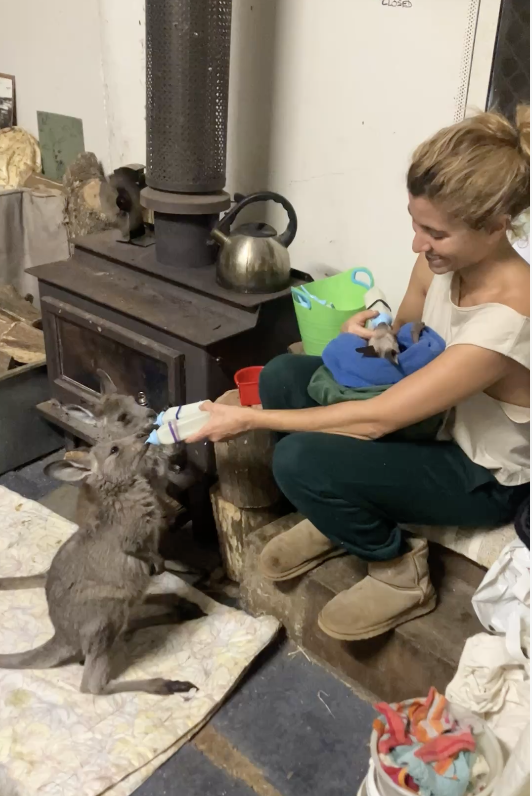
That is the first image I have of her. Moving slowly across the property, animals in every direction, two joeys in pouches next to the fire. The place was off-grid and falling apart in places and deeply alive in others. And she had been giving her entire life to it for fifty years.
I did not plan to stay. But I felt something I had not felt in a long time. The sense that this place mattered, that what this woman had built mattered, and that I could be part of making it what it was trying to become. A safe space, forever, for animals and for the humans who love them.
So I stayed. I gave my time freely. Not because I was naive. Because I believed in her and in the dream.
What it actually looked like
Two joeys became five. Five became ten. At one point fifteen. And what had been a team of volunteers became, for long stretches, just me and Glenda.
No days off. Joeys fed every four hours. Chopping wood because everything was off-grid. Driving to a caravan park every three days to get a hot shower. Paying for my own food.
I started a GoFundMe. I raised ten thousand dollars. I coordinated repairs because the nursery was literally falling apart. When I asked where the money was going the answer was always complicated. When I finally asked Glenda about a salary, just something small so I could keep going the way I was going, she said yes. But it was a yes that never became anything real. I was still paying for my own food.
I would ask for volunteer help in Facebook, and some comment that the sanctuary was becoming a hostel because I was looking for help like this. I used to think about those people and the time it took them to write that comment and what they could have done with that same time. Feeding the joeys. Cleaning the poo. Chopping wood. People who have too much free time are the ones who judge the people who do not.
I kept going anyway. I believed. And belief can carry you a long way past the point where you should have rested.
An old friend I used to play Rugby with in Mexico saw my post and asked to join. She was good with computers. Together we built a volunteer system so the place could actually function without burning through people. Proper rotations. Days off. That system is still running today. Volunteers who go through that sanctuary now have days off because of something we built. I am proud of that.
The end
I took a week off. The first real break in months. When I came back, I was not welcome.
Glenda said I never listened. That I had ruined things. In Spanish we have a phrase: chivo expiatorio. The scapegoat. The one who carries everything that went wrong so the story can keep going without looking at itself.
It hurt. It still does.
What I understood about Glenda is that she had sacrificed everything for those animals and had never learned to extend that same love to herself or to the people around her. She could not let go of control. When you have given your whole life to something and you are afraid of losing it, fear takes over. And fear makes you protect the story more than the people in it. I had seen her say I was like a daughter to her. That if she ever gave the place to anyone it would be to me. And then the door closed.
The hardest part was not her. It was everyone else. They had no idea why I was removed so suddenly. And they did not intervene. There were attempts to push me out of the community groups I had created, the networks I had developed, the alliances I had started. I had done all of that because I see what needs doing and I move. And in the end none of it was mine to keep.
Why I am telling you this
I see the same patterns everywhere. Wildlife shelters spending energy tearing each other down instead of collaborating. Activist organisations hoarding resources because scarcity thinking tells them there is not enough to share. I used to believe in certain leaders the way I believed in Glenda. I had to learn to see more clearly.
Scarcity thinking is not just economic. It is emotional. When you believe there is not enough, you stop being able to collaborate. You start protecting your territory. You become the thing you were fighting against.
There is also the question of money. I never understood why organisations are not fully transparent about what gets donated and how it gets used. Transparency is not complicated. It is just honesty. If you have nothing to hide, you show the numbers. Full stop.
Shikibuntu is built on the opposite of all of this. Collaboration instead of competition. Full transparency with money. No volunteer invisible. The people doing the work have a real voice in how it gets done.
These are not values I chose from a list. They are the direct lessons of that place, that woman, that year.
I am grateful for all of it. Even the part that broke my heart. Especially that part.
Because it made me know exactly what I was building.
— Gala Villagran Dichiara
Author: Gala Dichiara
I’m Gala, a biologist, artist, writer, conservation communicator, adventurer, and lifelong learner. I’m passionate about far too many things (and always adding more): from diving, wildlife, and storytelling to music, extreme sports, and building communities. But above all, animals are where my heart feels most at home. Through Shikibuntu, I’m creating a global community that reconnects people with nature and with each other, because I believe every act of care can ripple into meaningful change.