
Gift economy is not just about giving things away
I want to clear something up.
When I talk about gift economy, people sometimes hear: everything is free, nobody gets paid, everyone just gives and gives until they have nothing left. That is not what I mean. That is actually the opposite of what I mean.
The gift economy I am building toward is one where the people who give their gifts to the world can actually live. Where they do not have to spend the majority of their energy feeding a system they do not believe in, and then have nothing left for the work that actually matters to them.
The trap I see everywhere
I have so many friends who care deeply. About the earth, about animals, about community, about the future. They are exactly the kind of people this world needs more of.
And most of them spend forty, fifty, sixty hours a week doing work that has nothing to do with any of that. Work that pays the rent and nothing more. Work that drains them. And then they come home with whatever is left — which is usually not much — and try to give something to the causes they actually care about.
The system gets the best of them. The gift gets the rest.
I am not angry at those people. I understand the trap completely. Surviving inside a system that was not built for you is exhausting. But I refuse to accept that this is just how it has to be.
What I actually want to build
The dream behind Shikibuntu is not just a movement that does good work. It is a movement that supports the humans doing that work so they can do more of it and less of everything else.
That is what I am good at. Seeing people. Seeing their gifts. Cheerleading for them, promoting them, connecting them to the people and resources that let them go further. I have always done this naturally — in every sanctuary, every campaign, every community I have been part of. I see who has something real to give and I make noise about it.
Shikibuntu is that instinct with a structure around it.
When someone contributes to this movement — financially, with their time, with their skills — they are not just supporting a cause. They are part of a system that tries to free up the people inside it. Every contribution that comes in goes partly toward making sure the people doing the work can keep doing it without burning out or giving up because they cannot pay their rent.
That is why transparency with money matters so much to me. Not as an abstract principle. Because when you can see exactly where things go, you can see that your contribution is not disappearing into an organisation. It is going to a person. A specific human who is giving their gift and needs support to keep going.
Volunteer work is not free
There is a lie embedded in the word volunteer. The lie is that because something is given freely, it costs nothing. It costs everything. It costs time that could have been spent earning money. It costs energy that does not come back easily. It costs the parts of a person that are most alive and most easily crushed.
I have watched people volunteer themselves into exhaustion and leave movements they loved because they simply could not afford — financially or emotionally — to keep going. That loss is enormous. Not just for the person but for everything they would have built if they had been supported.
So when Shikibuntu talks about gift economy, this is what we mean in practice. We are not asking people to give more than they have. We are asking the people who have capacity to support the people who are already giving everything. So the giving can be sustainable. So the gifts do not burn out before they fully arrive.
Who I want to support
The people I want to find and promote and support through this movement are the ones who are already living their gift but struggling to sustain it. The wildlife rescuer who cannot pay her bills. The activist who is brilliant and burnt out. The community builder who has given years to something that never gave back. The biologist who would rather be in the field than in an office but cannot afford to be.
These people exist everywhere. Most of them do not talk about what it costs them. They just keep going until they cannot.
That is who this is for. Not the organisations. Not the institutions. The humans.
— Gala Villagran Dichiara
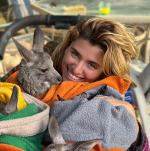
Author: Gala Dichiara
I’m Gala, a biologist, artist, writer, conservation communicator, adventurer, and lifelong learner. I’m passionate about far too many things (and always adding more): from diving, wildlife, and storytelling to music, extreme sports, and building communities. But above all, animals are where my heart feels most at home. Through Shikibuntu, I’m creating a global community that reconnects people with nature and with each other, because I believe every act of care can ripple into meaningful change.